






I build Python backends and AI automation. The part I enjoy most is the checking: making sure a tool still behaves when the model hands it something wrong. My background is Salesforce solution engineering, and in my spare time I build 3D printers and the software around them.


Public projects · How I build software · My research · Private builds
I'm Muhammad As'ad Waseem. Right now I'm looking for AI automation or backend engineering roles, and I'm also applying for a funded PhD in ML and embedded sensing for manufacturing and robotics (Germany, the Netherlands, the Nordics).
My background is Salesforce solution engineering, so I'm used to sitting between what a business asks for and what the platform can actually do. Most of what I build on my own time comes from the same habit. Find the real problem, script it, and keep testing it until it's boring.
I've completed my MS in Data Science. My thesis was on semantic, context-aware radar gesture recognition for TinyML and IoT devices. I wanted to see how far I could push gesture recognition on small hardware, and how the same gesture could mean different things depending on what the user was doing.
On the AI side I've worked with ML, deep learning, LLMs and agentic workflows. What I care about is wiring models into real tools and checking what comes back, not just getting a response. PolyForge, GrantCompass and zero-cost-ai-stack are the best examples of that.
These are projects you can open on GitHub, look through the code, and try for yourself.

I wanted a way to turn descriptions and measurements into editable CAD models. This brings together Python, CAD tools, optional local AI, and checks to see if the results actually make sense. Repository and implementation | Tests |

I wanted a better way to find funded study opportunities, compare them, and identify relevant researchers. This is a Python CLI and workflow that helps with searching, scoring, and reporting. Repository and implementation | Tests |

I made this because pricing a 3D print is more than calculating filament cost. It also considers machine time, electricity, maintenance, labor, design work, and profit across different slicers. Repository and implementation | Tests |

A Cura plugin for splitting models into printable parts and joining them back together with plugs, dowels, snaps, or dovetails. I built it around a proper geometry engine instead of just a visual trick. Repository and implementation | Tests |
Also public: VocalKeep

|
I wanted to hear speech in videos without the background music getting in the way. VocalKeep now has an offline Python processing engine and a local drag-and-drop web interface. I have also tested the AMD ROCm path on my own GPU, including checking that the hardware can actually run the model instead of trusting a device availability flag. Public repository | Experimental |
Built with AI: Dino Forge and zero-cost-ai-stack
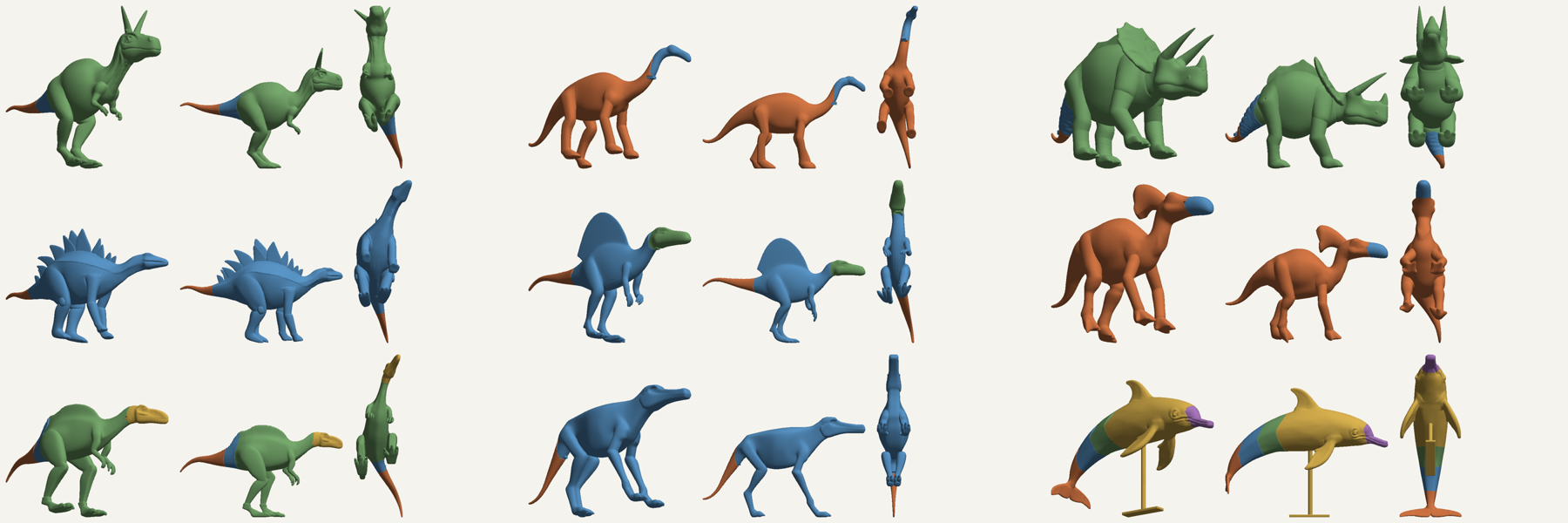
Type a species name, get a printable, movable dinosaur. FLUX, Qwen2.5-VL and TripoSG run offline on my AMD GPU, then my own joint finder places flexi hinges or snap-in ball joints. The code is private because I sell the kits. The showcase explains how it works and where the AI needed a human. Showcase | Code private |
How I get a lot done on one paid AI plan. Claude Code plans and reviews. Routine drafting and overnight coding tasks go to free LLM APIs and local Ollama models, through a tiered CLI, a task runner that only accepts work that passes its tests, and a status line that tracks the budget. Public repository | MIT |
I also have projects I'm building for myself and my printing work. I'm keeping the code private for now, but I wanted to show what I've been working on. These are custom illustrations for the profile, not screenshots or public demos.

Learning Forge I wanted to make educational models that do more than just look good. Learning Forge helps me create printable gears, mechanisms, and STEM kits, with checks for the maths and geometry. It also has a desktop interface so I can try ideas without doing everything by hand. Private project. Source code not public. |

Lamp Studio This started with Lumeforge and my earlier lamp experiments. I kept adding things I actually needed, and it has grown into an offline desktop app for designing lamps, light boxes, and printable parts. I'm keeping the newer application private while I work on the products. Private project. Source code not public. |

Puzzle Forge I've been experimenting with turning pictures, maps, and 3D models into puzzles that can actually be printed and assembled. This helps me work out the pieces, fit, and geometry instead of just making something that looks like a puzzle on screen. Private project. Source code not public. |

Chatmine I save a lot of useful links, photos, videos, and ideas in chats, then struggle to find them again. So I built Chatmine to organize that material and use AI to turn it into notes and ideas I can actually work with. Private project. Source code not public. |

Nightshift I kept repeating the same research and review tasks for my printing projects. Nightshift helps collect ideas, look for design problems, and prepare notes in automated runs. I still review the results and decide what is worth building. Private project. Source code not public. |

Madlab HQ My workstation has a growing collection of AI tools, local models, and projects. I wanted one place to check what's running and open the things I use regularly, so I started building a small local dashboard for all of it. Private project. Source code not public. |
- KitForge: I'm exploring ideas for printable STEM kits and how to plan their production.
- Quadender: I'm building my own multi-toolhead 3D printer, including custom mechanical parts.
- CADForge: I'm experimenting with ways to turn pictures and descriptions into editable CAD code. It's still research and development.
- PrintKit: I've been making calibration prints and simple tools to help translate real measurements into better print settings.
I have other experiments too, but these are a good snapshot. Some are still early, and I don't want to call them finished products before they're ready.

For my master's thesis, I worked with four radar gesture datasets and trained compact CNN models at different input resolutions. I also explored 8-bit quantization and the limits of running models on ESP32-class microcontrollers. The other part I found interesting was intent mapping: recognizing a gesture is one thing, but what it should do can change depending on the application you're using.
This was research and prototyping, not a commercial deployment.


I normally start with the problem, not the code. I figure out what I need the software to do, define the scope and requirements, and decide how I'll know it's actually working. I prefer keeping things modular so I can reuse useful parts in other projects.
| 01 / Plan and design Work out the requirements, architecture, edge cases, and what a passing result looks like. |
02 / Build with agents Break things into modules, direct the implementation, and review the parts that matter. |
03 / Test and improve Check real functionality, run unit and regression tests, and fix what doesn't meet the requirements. |
I can write Python and understand the code, but I use AI coding agents for a lot of the implementation so I can focus on the overall solution. I don't just accept what an agent generates. I check how it behaves, look at the code when needed, and decide what needs to change. I also document the decisions and try to catch problems before they become bigger ones. My bigger public repos (PolyForge, Cura Connect, VocalKeep) each have a short "How I built this" section that says plainly what I designed, what Claude Code wrote, and which bugs I had to catch myself.
I experiment with local open-source LLMs and token-efficient workflows too. If I can get something working reliably offline without spending unnecessary tokens, that's usually the route I'd prefer.
Explore my work · Connect on GitHub
I've kept my older learning projects here too. If you're new to my GitHub, the projects above are a good place to start.