




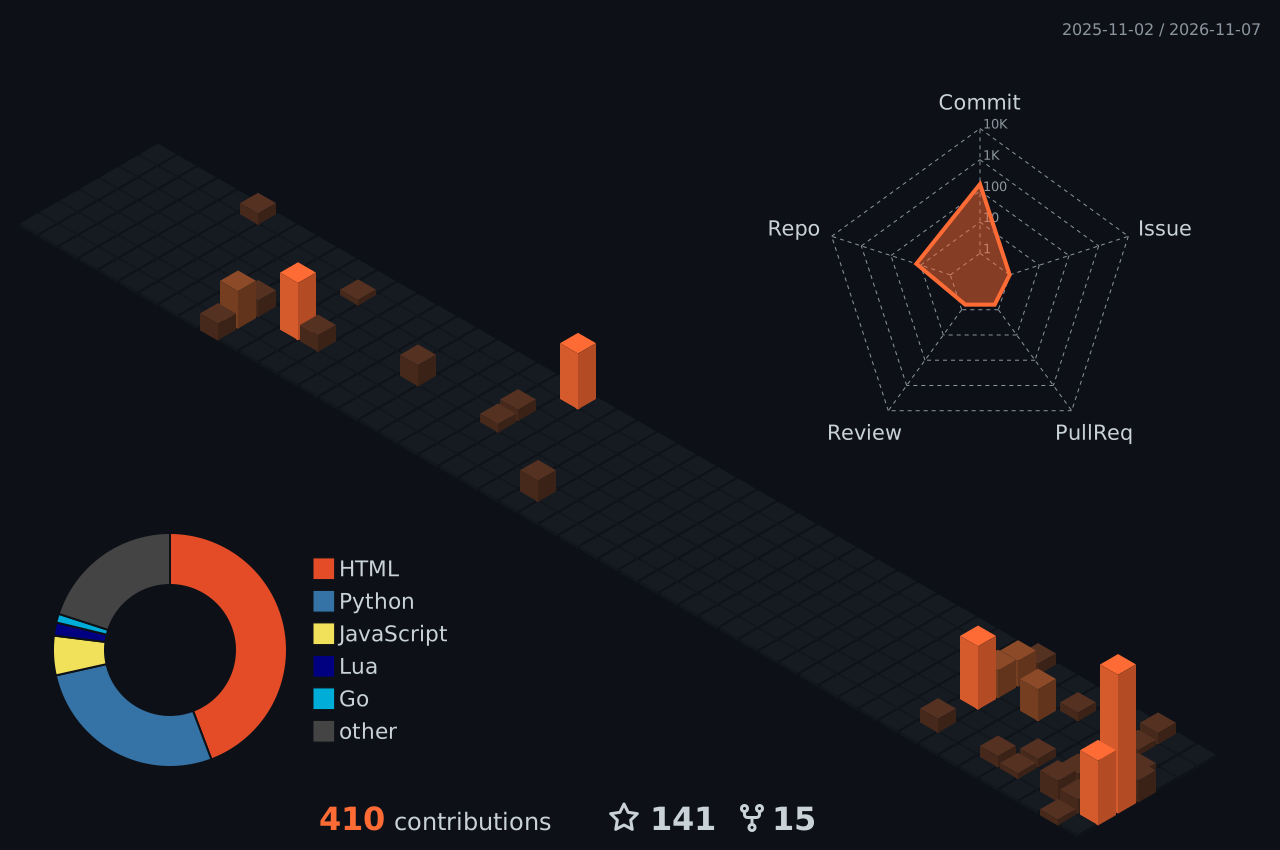
I write software that talks to hardware, and I train models that have to run somewhere real.
Most of what I know comes from projects that broke first — flight controllers, custom PCBs, 3D-printed airframes, trading models, vision pipelines. School gave me the theory. The workbench gave me the rest.
| School | IPSA Paris — aerospace engineering, 2nd year |
| Focus | Embedded software · applied ML · edge AI |
| Building since | Soldering at 8 · code at 13 · CAD at 15 |
| Daily driver | Linux · i7 · RTX 3050 — runs on Yuzu, a GNOME Shell extension I wrote |
| Also | Founder of STAR Group, a maker collective |
| Looking for | Internship — summer 2027 · Apprenticeship — 2027/2028 |
|
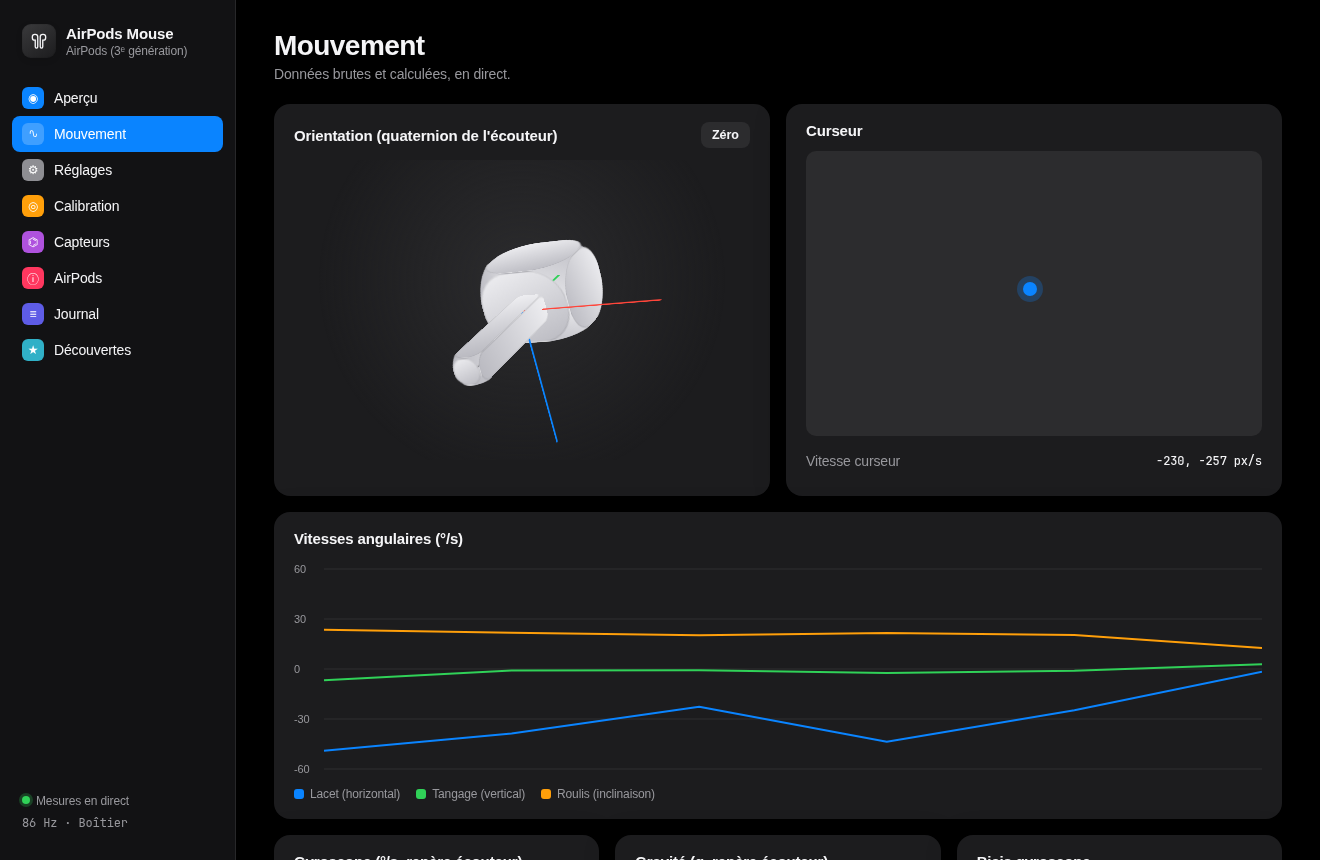
My AirPods are a mouse, and AirPods 3 finally give up their sensors No open-source tool could read head tracking from AirPods 3: every project listed them as untested or unsupported. I reverse-engineered why. They ignore the protocol AirPods Pro use, and expose their motion sensors as virtual HID devices through Apple RemoteHID, a channel nobody had documented. On top of that, Linux's default Bluetooth MTU hides them. With the protocol written down, AirPods 3 stream their orientation at up to ~210 Hz, and I turned it into a head mouse for Linux.


|
 |
||||||||||
|
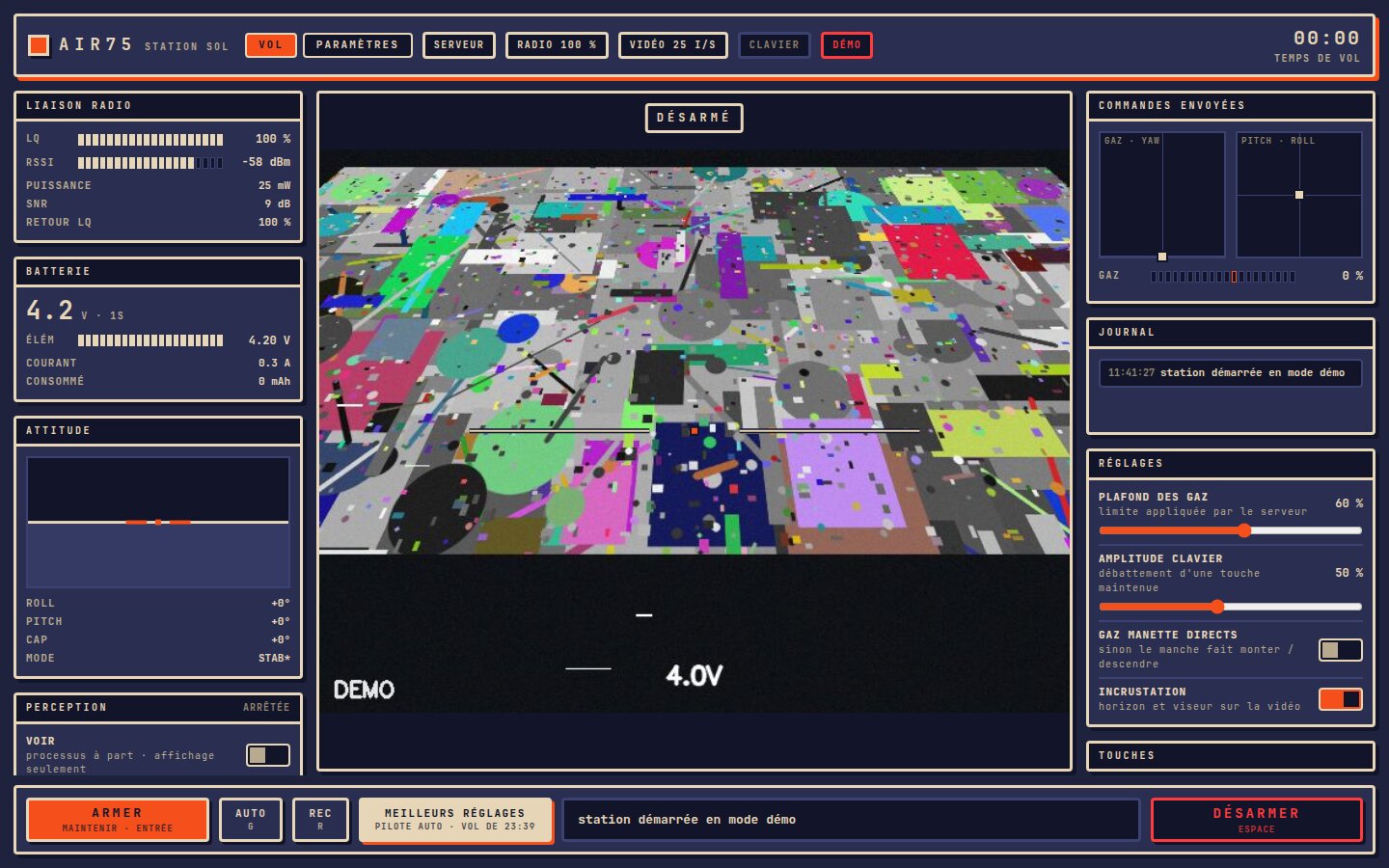
A tiny FPV drone flown by a brain that stays on the ground A stock 75 mm whoop, flown by my PC. The analog video comes down to the computer, a vision autopilot decides, and the stick commands go back up over the normal ExpressLRS link. Nothing is bolted onto the drone: no companion computer, no extra sensor. From the camera image alone, it takes off, holds its position and lands.


|
 |
||||||||||
|
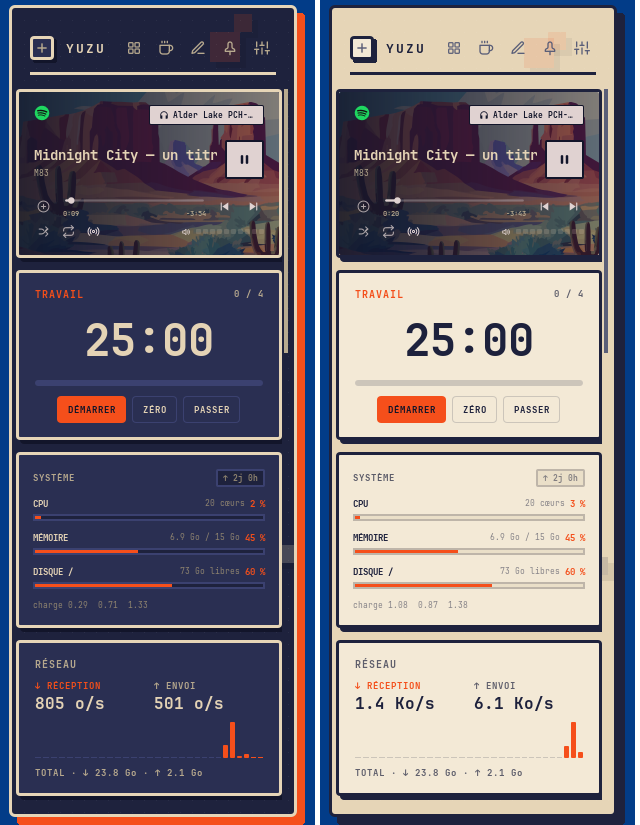
A floating side panel for GNOME Shell, made of the cards you choose My daily driver, turned into a product. The panel slides in from the right edge of the screen (or


|
 |
||||||||||
|
Audio → facial blendshapes A model that drives 3D facial animation straight from a voice track, shipped with its own interface. Built the dataset, trained the network, wrote the UI. 

|
 |
||||||||||
|
Long-endurance flight on solar power Airframe, electronics and flight software all built in-house. The hard part isn't the flying, it's the energy budget. 


|
 |
||||||||||
|
Five browser-native tools — one HTML file each, zero backend Heavy compute runs entirely client-side: LLM inference on WebGPU, object detection on a live webcam feed, 3D geometry, ZIP export. No install, no build step, no account, nothing leaving the machine.


|


|
Other repositories
| Embedded | STM32 · Arduino Nano/Uno · Raspberry Pi SPI · I²C · UART · PWM · interrupts · timers · embedded Linux |
|
| Machine learning | PyTorch · scikit-learn · XGBoost · pandas Computer vision · time series · LLM fine-tuning · custom datasets |
|
| Software | Python · C++ · Rust · JavaScript · HTML/CSS Web apps · scrapers · automation · GNOME Shell extensions (GJS) |
|
| Hardware & CAD | KiCad · Fusion 360 · FreeCAD · CATIA · SolidWorks Schematic to routed PCB · 3D printing · laser cutting |
|
| Tooling | Linux · Git · GitHub Actions · Docker CI pipelines, automated builds and releases |


| Fabrication Wanhao Duplicator 12 — dual extruder Soldering station — THT & SMD Laser cutting (off-site) |
Compute Linux daily driver — i7 · RTX 3050 Dual-boot, but always on Linux Custom GNOME Shell extensions — Yuzu |
Flight FPV quads Flying wings Gliders — incl. the solar build |
A maker collective I founded — a place to build ambitious projects with people who'd rather ship than talk about shipping. Currently in development.
Version française
J'écris du logiciel qui parle à du matériel, et j'entraîne des modèles qui doivent tourner quelque part de réel.
L'essentiel de ce que je sais vient de projets qui ont d'abord cassé — contrôleurs de vol, PCB maison, cellules imprimées en 3D, modèles de trading, pipelines de vision. L'école m'a donné la théorie, l'établi a fait le reste.
| École | IPSA Paris — 2ᵉ année |
| Domaines | Logiciel embarqué · ML appliqué · edge AI |
| Depuis | Soudure à 8 ans · code à 13 ans · CAO à 15 ans |
| Recherche | Stage été 2027 · alternance 2027/2028 |
| Domaine | Détail |
|---|---|
| Embarqué | STM32, Arduino, Raspberry Pi · SPI, I²C, UART, PWM, interruptions · C++ bare-metal · Linux embarqué |
| Machine learning | PyTorch, scikit-learn, XGBoost · vision, séries temporelles, fine-tuning de LLM, audio → blendshapes · datasets constitués à la main |
| Logiciel | Python, C++, Rust, JavaScript · scrapers, automatisation, extensions GNOME Shell (GJS) |
| Matériel & CAO | KiCad du schéma au PCB routé · Fusion 360, FreeCAD, CATIA · impression 3D |
Mes AirPods sont une souris. Aucun outil open source n'arrivait à lire le suivi de tête des AirPods 3. J'ai trouvé pourquoi par rétro-ingénierie Bluetooth : ils ignorent le protocole des AirPods Pro et exposent leurs capteurs comme des périphériques HID virtuels via Apple RemoteHID, un canal jamais documenté, que la taille de paquet Bluetooth par défaut de Linux cache en plus. Une fois le protocole décrit, les AirPods 3 envoient leur orientation jusqu'à ~210 fois par seconde, et j'en ai fait une souris par la tête sous Linux. Spécification, captures et journal publiés — dépôt · site.
Un petit drone FPV de 75 mm piloté par mon PC. La vidéo analogique descend jusqu'à l'ordinateur, un pilote automatique par vision décide, et les commandes remontent par la liaison ExpressLRS habituelle, sans rien ajouter sur le drone. À partir de la seule image de la caméra, il décolle, tient sa position et se pose : 67 vols enregistrés, 17 atterrissages autonomes, un jumeau numérique fidèle à ±1 cm en stationnaire — dépôt.
Un panneau latéral flottant pour GNOME Shell (46–49), composé des cartes que l'on choisit : lecteur multimédia, suivi du temps, tâches, moniteur système, météo, marchés. Les modules communautaires s'installent en un clic depuis un catalogue et apparaissent à chaud, sans redémarrer le shell. Publié en v6.0 avec CI et installateur en une ligne — dépôt.
Wanhao Duplicator 12 (double extrudeur), station de soudure, découpe laser en externe. PC sous Linux au quotidien (i7, RTX 3050). Quads FPV, ailes volantes, planeurs — dont un planeur solaire en cours.
Un collectif de makers que j'ai fondé — un endroit pour construire des projets ambitieux avec des gens qui préfèrent livrer que d'en parler. En cours de développement.

